Sunday, March 30, 2008

PARK(ing) Day: More parks for people, fewer for cars!

ITDP's latest newsletter highlights the growing call for a rebalancing of urban space, away from the car dominated model to a people friendly design. PARK(ing) Day was held on September 27th 2007 in 47 cities around the world. Over a 180 small parks where temporarily created from parking spaces in an attempt to show the potential of the space for a use other than parking cars. Once you can see the future you are more likely to fight for it!


Labels:

Climate Change Action

Home furl google deliciousdel.icio.usnetvouz newsvine diggDigg This!reddit spurl Technorati

Enter your Email


Preview | Powered by FeedBlitz

Sunday, February 03, 2008

A look at the future: transit, transit oriented development and new urbanism.

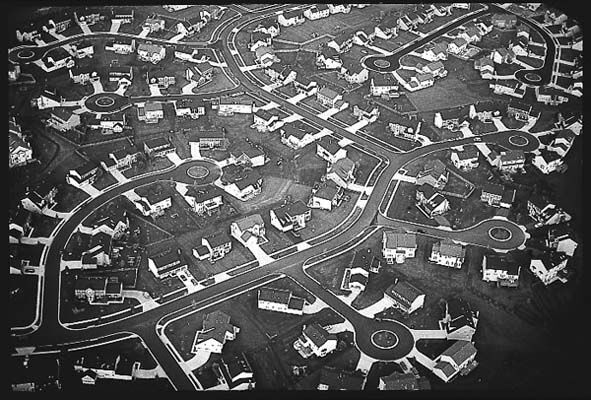
The US has done a lot of great things, started a lot of great trends and often inspired the world. It also created the concept of Suburbia and has created some of the worlds greatest examples of sprawl, some countires are following suit. But the US is finally moving away from this development trend, largely for demographic reasons.

This lecture explains well the nobel reasons for Suburbia, the subsidies that supported the idea and a discription of some new ways to develop. My favourite quote


"This is not ment to be a political statement, but if we had not faught a war in iraq qw could have put 50 of these light rail systems in place for every week that we have been in Iraq for the last five years."

There is also a discussion of a study carried out into the cost of each additional unit of housing in
a certain city, the outcome is that in the downtown areas at higher density the cost is around 1000 dollars per house for the council. For suburban areas the cost is around 22'000 dollars per unit.

Virginia Tech New Metropolist Lectures Series: "Thinking Big: Leasons from The Washington Metro" podcast, presentation.
To me, the best examples of urban development are transit oriented, having either trams, underground or bus rapid transit at the core. Perhaps the best example of Bus Rapid Transit in the world.

Bus Rapid Transit in Bogota. Video.
One of the best reasons for developing around transit stops is the reduced expenditure
on transportation costs and the consequent greater level of access to jobs for all
sectors of society.

University of Oregon, School of Architechture and Allied Arts. Shelly Poticha speaks on "Building the Livable Region: Transit Oriented Development and Development-Oriented Transit" podcast.

Labels: , ,

Climate Change Action

Home furl google deliciousdel.icio.usnetvouz newsvine diggDigg This!reddit spurl Technorati

Enter your Email


Preview | Powered by FeedBlitz

Friday, December 07, 2007

CNU 2007 Transport Summit: Video

Last month i attended the Congress for New Urbanims transportation summit. Finally, the video is available. These two clips present some highlights and the full unedited video is availalbe bellow that.

CNU Transportation Summit Highlights: 1 of 2


CNU Transportation Summit Highlights: 2 of 2


This video covers:

Street Design Manual Comparison: 3 examples – each organization presents their respective manual and gives a brief explanation.
9:30-9:50am Marcy McInelly & Norman Garrick
CNU-ITE manual-Major UrbanThoroughfares
9:50- 10:10am Andy Cameron presenting the UK manual for streets and design codes as an implementation tool
10:10-10:30am Ellen Greenberg presenting the West Australian Liveable Neighborhoods Code -street standards component Australia-manual.
This video has an error and will be updated shortly (b)

This video covers:

11:00-11:45am Michelle Dix, Managing Director of Planning, at TFL, former director of Congestion Charging Design Challenges- Current and Future Reforms, Street Patterns and Hierarchy –challenging conventional transport modeling and “predict and provide”. An overview of TfL's role & responsibilities Review of Congestion Charging successes/failures & unforeseen consequences of the scheme Talk tailored to cover street-level modal share and design-led innovation
11:45am-12:00pm Alain Chiaradia, Space Syntax
Alain will discuss Network Connectivity and the Space Syntax approach to
structure analysis and distribution and mix of uses according to key movement
nodes
This video covers:

Transportation and the Carbon Challenge
13:45pm-13:55pm Jacky Grimshaw to introduce the afternoon
13:55pm-14:15pm Norman Garrick framing the afternoon
Introduction to LEED for Neighborhood Developments (LEED ND)
14:15pm-14:45pm Hank Dittmar, Chief Executive, Prince’s Foundation for the Built Environment. Hank will discuss the BRE analysis scores 85% for Sherford on Eco Rating – presentation of methodology; how this project inform LEED ND Policy lever of Climate Change.

This video covers:

Shared Space Integrating Design and Placemaking
10:45am-11:15am Q&A Hans Monderman, Ben Hamilton-Baillie, Daniel Moylan
11:15-11:30 BREAK
11:30-12:00pm Stephen Marshall, transportation planner and urban designer, will discuss how zoning and modernist principles have created street designs for cars, and not people. New street designs that promote access and connectivity will be
discussed as necessary alternatives.
12:00-12:30pm Lucinda Gibson, Vice President, Smart Mobility Regional Modeling and Network Functional Classification
12:30- 1:00pm Yodan Rofe will address the role of major streets as urban places and creators of a continuous urban fabric, using the "pedestrian realm" as the basis for a new paradigm in urban street design. He will show examples of transforming urban roads from mere traffic conductors into great streets and generators of urbanity.

Labels: , ,

Climate Change Action

Home furl google deliciousdel.icio.usnetvouz newsvine diggDigg This!reddit spurl Technorati

Enter your Email


Preview | Powered by FeedBlitz

Friday, November 16, 2007

CNU: 2007 London Transport Summit (Day 2--Late Afternoon)

The late afternoon on Tuesday finished strong with presentations by Shelley Poticha (President & CEO, Reconnecting America) and Jacky Grimshaw (Vice President for Policy, Centre for Neighbourhood Technology).

Shelley spoke about Transit Oriented Development (TOD) and the current challenges facing this industry and the successes to date. This was viewed perticularly through the lens of reducing carbon emmissions, something that we have to get really serious about. Mode shift, from car to active transport and mass transit.

Shelly recently contributed to New Transit Town which can be bought here.


Jacky Grimshaw then spoke about some work that CNT have been doing in relation to new urbanism and climate change. In particular the link between new urbanism 'Transects' and carbon emissions was very interesting to me, tremendous work, really forward looking. I was not supprised to hear that CNT have been working with US Mayors through ICLEI and also with the clinton global intative on fighting climate change.

Related: More on the conference here, related audio and video, including the talks by Jacky and Shelly will be coming soon.

Labels: , ,

Climate Change Action

Home furl google deliciousdel.icio.usnetvouz newsvine diggDigg This!reddit spurl Technorati

Enter your Email


Preview | Powered by FeedBlitz

Thursday, November 15, 2007

CNU: Transportation Summit 2007 Presentations

The presentations from the CNU transportation summit will be available from here as soon as they have been uploaded. Last years presentations are currently available here.

Labels: , ,

Climate Change Action

Home furl google deliciousdel.icio.usnetvouz newsvine diggDigg This!reddit spurl Technorati

Enter your Email


Preview | Powered by FeedBlitz

CNU: 2007 London Transport Summit (Day 2--Afternoon)

During the afternoon of the second day we listened to several excellent presentations.

Lucinda Gibson (VP, Smart Mobility) gave a fascinating and insightful look into the world of traffic modelling. This realm is often looked on with some scepticism by new urbanists and smart growth advocates because model results rarely back up there experience of mixed use and compact development advantages. Lucinda described the reasons for model failure; these can be placed in two categories, both of which are common place. Firstly the purposeful distortion of models where they are deliberately skewed to meet political agendas, this can be readily done by giving model variables unrealistic values in a subtle but systematic way. Secondly, the real errors of models that do not capture the traffic system accurately. In terms of demand there are a whole range of factors which would likely reduce the outcome, from increasing oil prices, climate change legislation and increasing environmental awareness, whilst these cannot reasonably be included in a model they should be factored in to analysis of the model and appreciated as downward factors that increase the likelihood of lower ranges of traffic. This talk was fascinating to me and i`m sure that anyone working against highway extension would do well to heed Lucinda's advice and look carefully at the traffic model both in terms of its values and how they where derived and any significant exclusions.

Yodan Rofe (Professor, Ben-Gurion University of the Negev) then gave a talk on the use of urban Boulevards as an alternative to urban motorways (highways). Yodan made a powerful case for the use of pedestrian realm as the new urban paradigm. In the case of an urban Boulevard street life is encouraged by having wide pavements and then some parking and a slow moving access street, after this is a broad tree planted area bordering the central through traffic lanes which contain high speed vehicles. Studies have found that this combination of barriers between pedestrians and the fast moving traffic is sufficient to make development along boulevards possible. This is in stark contrast to current motorways (highways) running through cities which are often at different levels and protected by barriers and fencing. Motorways currently offer no accommodation between place and transport function, they are human repelling and street life destroying. The quantity of recoverable urban highways is vast.


Jacky Grimshaw (VP, CNT), Norman Garrick (Associate Prof. UCONN)and Hank Dittmar (CE, Prince's Foundation) then spoke about the reasoning behind LEED-ND. The case was made, and quite convincingly, that buildings rated in isolation of there context risk failing the sustainability challenge. For example a company moving out of a high density mixed use urban setting into a low density single use suburban setting is almost certainly going to force part of its workforce off mass transit and into there cars. Journeys and emissions will increase, and the true advantage of a LEED-Platinum building may be in doubt; greater emissions in the transport/building total are likely even if the old building was relatively inefficient. There where a variety of data used in these presentations but with some overlap, Kenworthy's data which is well known was used, but other data which addressed some critiques of the aforementioned data set where also presented. Among the more striking correlations found was presented by Norman Garrick who showed a phenomenally tight match between year of incorporation of US cities and road fatalaties!

Labels: , , ,

Climate Change Action

Home furl google deliciousdel.icio.usnetvouz newsvine diggDigg This!reddit spurl Technorati

Enter your Email


Preview | Powered by FeedBlitz

Wednesday, November 14, 2007

CNU: 2007 London Transport Summit (Day 2--Morning)

The first day had a range of tours through various parts of London where design improvements had been implemented. Without this on the second day we covered less ground physically but more figuratively.

Day 2: Tuesday 13th November 2007

First off there where two related talks on pedestrian friendly urban design, accommodating traffic but equalizing the currently dysfunctional relationship of priorities between human and vehicular traffic. The first talk was given by Ben Hamillton-Baillie who has worked on the UK Guide for Streets and done research into the legal situation with regards signage and barrier requirements. It is important that councils can feel confident that they are legally secure if they decide to avoid using excessive signage and barriers. It turns out that in the UK at least the fears of litigation by drivers are unfounded. There are many guidance notes, green paper and other reports on signs and street design but virtually all of it is advisory.

Given this context, the second talk, by Hans Moderman covers a change in paradigm that is legally practical. Interestingly Hans has a very libertarian perspective on the relation between people in cars and on there feet. The key idea is of changing the behaviour of drivers not by using laws but by changing context: don't set 30 mph speed limits that people don't follow, slow traffic even further by simply designing streets that are amenable to lower speeds. Introducing uncertainty for the driver and re-enfranchising the pedestrian are methods. The ideas that Hans puts forward (Telegraph Article) are based on careful and long term measurement of test schemes and on universals of human behaviour. It seems--and this is gaining acceptance--that people behave rationally if you don't dictate rules to them! Removing confusing signage and road marking are part of this as is a general reduction of street clutter; another part is making it appear thorugh choice of materials and careful design that cars, bikes, people, all have a right to the street. The feeling that is created for drivers is one 'like driving on a cycle lane that you are allowed to use' there is a sense that people and bike have the right to walk wherever they like and that you just have to deal with it: bye and large people do deal with it very efficiently! In fact watching a video clip of a Hans Moderman roundabout at a busy junction is hypnotic in its fluidity. One junction with >20'000 cars a day was seen to function without a single cyclist stopping in 24hr!

Labels: , , ,

Climate Change Action

Home furl google deliciousdel.icio.usnetvouz newsvine diggDigg This!reddit spurl Technorati

Enter your Email


Preview | Powered by FeedBlitz

Congress The New Urbanism: 2007 London Transport Summit (Day 1)

I`ve just arrive back home from the CNU transportation summit in London. I'd write something here about my train journey if this blog was for rants...but as it isn't, i`ll just give a quick overview of the event. There is video and audio from the conference on the way so stay tuned!

Day 1: Monday November 14th

There where three presentations that we where still talking about the next day. The first was on the CNU-ITE manual 'Major Urban Thoroughfares' (Large PDF). This manual in its current form is by no means supported by everyone from CNU--the same is probably true for ITE--but it is still seen as progress on the issue of major roads in cities. Some felt that motorways have no place in an urban context and that boulevards are the way so solve this conflict, a significant divergence still exists between ITE and CNU on when this idea and many others should be applied. it would appear that there is significant conflict mainly on the applicability of certain measures to a given place. Perhaps a history of projects and careful cross comparison can help settle these debates. Reducing uncertainty is part of the issue but the other significant part is politics, society needs to ask itself what it wants its streets for...are they only a means or are they also of value in there own right? This idea of place vs function was a reoccurring theme.

The second presentation of note was on the new uk planning guidence for streets 'Manual for Streets' is compromised in several ways but significantly it is now the only relavent DfT/DCLG document on road design: it superceedes that last document which has been officially binned giving this new advice added strength. For the first time the govornments official guidance is specifically geared towards enhancing the urban environment in order to make it more walkable.

The final presentation that caught my attention was by Transport for London (TfL) on the congestion charge (currently a flat £8 fee for driving in central London) and alternatives to travel by car on London. Despite what you might have heard the congestion charge does actually bring in significant amounts of revenue for TfL the administrative costs are significant but around 2/3rds of the revenue is plowed back into transport investment. Of this the vast majority goes on the bus service and particularly bus station upgrades and security. However the total TfL revenue is several billion pounds annually so the congestion charge is only a small part of the overall total. The key success of TfL has been its ability to get people out of cars and onto buses. I think that this is an important example for other cities. Congestion charging is best used as a compliment to improved and extended bus services. In this way people from every part of society can effectively be moved out of cars and on to mass transit.

Labels: , , ,

Climate Change Action

Home furl google deliciousdel.icio.usnetvouz newsvine diggDigg This!reddit spurl Technorati

Enter your Email


Preview | Powered by FeedBlitz

Sunday, November 04, 2007

Smart Growth Forum

Six of California's most respected experts in land use planning and smart growth came to Grass Valley, California to share their land use planning experience with our community. Carville Sierra, Inc. hosts Smart Growth Forum  June 16, 2006.

Experts include:


Labels: , ,

Climate Change Action

Home furl google deliciousdel.icio.usnetvouz newsvine diggDigg This!reddit spurl Technorati

Enter your Email


Preview | Powered by FeedBlitz

Monday, October 01, 2007

'Green Development?' only if the planning is right.

In the US, certification of buildings as energy efficient has been a huge success, particularly since LEED (Leadership in Energy Efficient Design) developed a standard that could be built
to and shown off.

Now that builders and architects are familiar with the requirements of LEED it has become a standard offering, particularly for high quality space: people are at last putting a premium on well designed comfortable and healthy space.

This trends is great news, and as it spreads further into the building sector as a whole, and internationally it looks set to make a significant impact on carbon emissions.

However, there is one further step to green building. Namely, accepting the fact that a green building miles from work is not truly green. Site has to be considered. Compact urban development is the most sustainable form of growth. Enter LEED New Development
(LEED-ND).

"Just as other LEED systems have improved building efficiency and energy performance, LEED-ND will reward efficient use of land and the building of complete and walkable communities,"
said John Norquist, President and CEO of the Congress for the New Urbanism.

"It is helping to reinforce a more complete understanding of sustainability that extends all the way from the individual building to the neighborhood and community."
Relevant Links:

Labels: ,

Climate Change Action

Home furl google deliciousdel.icio.usnetvouz newsvine diggDigg This!reddit spurl Technorati

Enter your Email


Preview | Powered by FeedBlitz

Sunday, September 30, 2007

Key to Urban Design: Sustainable Transportation (VIDEO)

This is a really superb video about urban design, transport and climate change. It takes a few minutes to get going but by 10 minutes in it is very compelling viewing.

Dean Harrison Fraker of the College of Environmental Design, U.C. Berkeley addresses the Meeting of the Minds conference in Oakland, Ca 12 September 2007 on the
"Key to Urban Design: Sustainable Transportation."
For other presentations from the conference by some of the top urban planners and policy makers, visit EVWORLD.COM.

Labels: , ,

Climate Change Action

Home furl google deliciousdel.icio.usnetvouz newsvine diggDigg This!reddit spurl Technorati

Enter your Email


Preview | Powered by FeedBlitz

Sunday, September 16, 2007

Urban Management In Asia: Recommended Reading

My interest for the last week or two has been urban planning and sustainable transport. Well, to be honest it was sustainable transport and has broadened out into planning.

In particular i have been reading about bus rapid transit, cycle cities, suburban sprawl, transport and health etc., I have been reading about cases from all over the world but i thought i would be nice to look at what is (or could be) happening is Asia.

The institute for global environmental stratgegies (IGES) has done pioneering research on post-2012 priorities for Asian nations. It does, however, get a touch less theoretical.

There are a great series of report/articles/papers on climate change and urban development on this page. Including entire books for free download!

A few highlights:

'Air pollution control in the transport sector' is a publication most interesting to me for its case studies, which i ususally find to be far more interesting than discussion in the abstract. Atleast for an amateur it is easy to understand the issues through comparison.
The fourth chapter consists of six case studies and one comparative analysis on policies related to transport and environment in Asian cities.
'Urban Energy Use and Greenhouse Gas Emissions from Asian Mega-Cities' is a lot broader than transport policy however it maintains the comparative approach and takes care to analyse the data. If you can see the numbers then there is a good chance you can realistically appraise the issues for yourself. As with many issues related to climate change good data is really the start.
[the report] aims to quantify CO2 emissions from energy use and analyse their driving factors for selected Asian Mega-Cities-Tokyo, Seoul, Beijing and Shanghai.

Labels: , , , , ,

Climate Change Action

Home furl google deliciousdel.icio.usnetvouz newsvine diggDigg This!reddit spurl Technorati

Enter your Email


Preview | Powered by FeedBlitz

Friday, September 14, 2007

An alternative to segregation and sprawl: New Urbanism


A great series of videos advocating mixed land use and an end to modern day suburbia.

There are better alternatives than the status quo and they are easier, cheaper, mores sustainable and more liveable.

Video 1 (of 9)

Labels: ,

Climate Change Action

Home furl google deliciousdel.icio.usnetvouz newsvine diggDigg This!reddit spurl Technorati

Enter your Email


Preview | Powered by FeedBlitz

Audio of the week: Jan Ghel on Creating Pedestrian Cities

I just listened to this superb podcast (MP3) about creating cities that people can really live in. Opening up public space into a place for meeting rather than just moving is the basic aim. Very interesting thinking, reminds me of something Amory Lovins said about transport being nessicary only because of bad design...why isnt the thing you want near you? Jan paints such a positive picture of what a city can be that you start to question this whole idea of transport...where exactly are you going; its so nice here!


World-leading Danish Architect Professor Jan Gehl will talk about transforming cities into people friendly spaces at a free City of Sydney City Talk on Tuesday 11 September 6.30 pm at Sydney Theatre at Walsh Bay.

Prof Gehl has conducted Public Spaces and Public Life surveys in cities like London, Copenhagen, Wellington and Stockholm in a bid to redistribute the balance between cars and people.

Lord Mayor Clover Moore MP said Prof Gehl is currently finalising a Public Life and Spaces Study for Sydney which is expected to be complete by December as part of the City's Sustainable Sydney 2030 plans.

Via the City Talks podcast.

Labels: , ,

Climate Change Action

Home furl google deliciousdel.icio.usnetvouz newsvine diggDigg This!reddit spurl Technorati

Enter your Email


Preview | Powered by FeedBlitz